Bedding Guide
Cotton or Linen Sheets? Comparing Breathability, Texture, and Care
Both cotton and linen can make a bed feel comfortable and breathable. But the fibers, fabric construction, and way each material changes with use create distinctly different experiences. The right choice depends less on a label or a headline thread count than on the climate in your room, the feel you enjoy against your skin, and how much care you want your sheets to require.
Sheets occupy an unusually intimate place in the home. They are touched for hours at a time, washed repeatedly, and asked to feel comfortable through changing seasons. That makes the choice between cotton and linen practical as well as personal: one person may love a smooth, close-woven cotton surface; another may prefer linen’s relaxed texture and airy drape.
Neither fabric is automatically cooler, more durable, or more luxurious in every circumstance. Fiber quality matters, but so do yarn construction, weave, finishing, weight, and the conditions in which the bedding is used. A lightweight cotton percale and a dense cotton sateen, for example, can feel more different from one another than either feels like a linen sheet. Understanding those distinctions helps separate useful guidance from broad claims.
This guide compares cotton and linen sheets by breathability, texture, care, and long-term use. It also explains what to look for on a product label and how to choose sheets that suit your preferences without relying on thread count alone.
Start with the fiber: cotton and linen are not the same material
Cotton comes from the soft fibers surrounding the seeds of the cotton plant. It is spun into yarns and woven into fabrics with a wide range of finishes, weights, and textures. That versatility is one reason cotton sheets are common: the same fiber can become crisp percale, smooth sateen, or a variety of other constructions.
Linen is made from fibers in the stalk of the flax plant. Flax fibers are relatively long and have a characteristic firmness that gives linen its familiar texture and drape. Linen fabric often has visible irregularities in its yarns. These are part of its natural appearance, not necessarily flaws, and they contribute to the fabric’s distinctive, relaxed character.
The difference in source is only the first part of the story. How fibers are processed and spun affects the resulting yarn; how yarns are woven affects the sheet’s structure; and finishing can change the way a surface feels. “Cotton” and “linen” identify fiber types, not a single, standardized level of softness, cooling, or quality.
Breathability and temperature comfort
Breathability is often used as shorthand for sleeping cool, but a sheet does not control temperature on its own. Comfort depends on the full sleep environment: room temperature, humidity, mattress and protector materials, sleepwear, bedding layers, and an individual’s heat and moisture response. A sheet’s contribution comes largely from its construction and how it handles air and moisture near the body.
Linen is valued for its open, textured feel and its ability to manage moisture. Its construction can allow air to move through the fabric, while flax fibers can absorb moisture. For sleepers who dislike a clingy surface or live in warm, humid conditions, linen may feel especially comfortable. Its relaxed drape can also make a bed feel less tightly wrapped than one covered in a smooth, closely fitted fabric.
Cotton can also be breathable, but the experience varies considerably. Percale is typically woven in a simple, balanced structure that creates a crisp, matte surface. Many people associate it with a cool, airy feel. Sateen uses a different weave that places more yarn surface on the face of the fabric, giving it a smoother, often heavier hand and a subtle sheen. That does not make sateen inherently uncomfortable; it simply offers a different balance of softness, drape, and airflow.
When comparing breathable bedding, look beyond the fiber name. Consider fabric weight, weave, and whether the sheet feels airy or dense in your hands. If possible, check a sample or read care and construction details. A lightweight cotton percale may suit a hot sleeper better than a heavy cotton sateen, while a loosely woven linen may feel preferable to either. Individual response remains the final measure.
Claims that a particular sheet will prevent sweating or solve persistent night overheating should be treated cautiously. Bedding can influence surface comfort, but it cannot diagnose or resolve every cause of disrupted sleep. If night sweats or overheating are ongoing concerns, consider the broader sleep environment and speak with a qualified health professional when appropriate.
Texture: crisp, smooth, or softly rumpled
Texture is where the difference between cotton and linen is often most immediately noticeable. Cotton sheets can feel crisp, cool, smooth, silky, or brushed, depending on the yarn, weave, and finish. Percale tends toward a clean, crisp hand, while sateen is generally smoother and more fluid. Some cotton sheets soften substantially over repeated washing; others retain a firmer feel.
Linen usually has more visible texture and a natural, gently uneven surface. New linen can feel firm or coarse to someone accustomed to finely finished cotton. With regular laundering and use, it often softens while retaining its characteristic structure. It is not designed to look perfectly pressed: creases and a lightly rumpled appearance are part of linen’s everyday appeal.
These qualities are preferences, not a hierarchy. Someone who enjoys a neat, smooth bed may gravitate toward cotton percale or sateen. Someone who prefers a looser, more tactile surface may enjoy linen. A person with sensitive skin may find either fabric comfortable—or may need to consider the specific finish, weave, and softness rather than choosing by fiber name alone.
Try to distinguish a fabric’s natural feel from the effect of a finish. Some products are treated to feel especially smooth at first, and that sensation may change over time or with washing. Labels and product descriptions can clarify whether a sheet is pre-washed, garment-washed, brushed, or otherwise finished. These details often provide a more useful picture than a broad promise of “luxury softness.”
Thread count is only one part of the picture
Thread count refers to the number of threads woven into a square inch of fabric, typically counting lengthwise and crosswise yarns. It can help describe some cotton sheets, but it is not a universal quality score. Yarn thickness, fiber quality, weave, finishing, and manufacturing all affect the finished fabric. A higher number alone cannot guarantee better comfort or durability.
Thread count is particularly unhelpful when comparing cotton directly with linen. Linen yarns and fabric structures differ from those commonly used in cotton sheeting, so the same numerical comparison does not convey a like-for-like measure of softness, airflow, or craftsmanship. For linen, pay closer attention to the fabric’s weight, construction, stated fiber content, and the feel you want.
For cotton, consider whether the fabric is percale or sateen, how it feels, and whether the manufacturer provides clear information about fiber and construction. For both materials, look for straightforward descriptions rather than relying on unusually large numbers or vague claims. The sheet you find comfortable is a better guide than a number that cannot capture how it will feel on your bed.
Care: routine, laundering, and drying
Care needs can shape long-term satisfaction as much as initial comfort. Always follow the manufacturer’s instructions, because recommended washing temperatures, drying methods, and precautions differ among products. Detergent, water hardness, machine capacity, and drying conditions can also influence how sheets age.
Cotton sheets are generally straightforward to launder. Many can be machine-washed and tumble-dried, though temperature and cycle guidance varies. Removing sheets promptly from the dryer can help limit deep creasing. If cotton is dried at high heat repeatedly, it may be more prone to shrinkage or wear than when washed and dried according to its label. Avoid assuming that every cotton sheet can be treated identically, especially if it has a special finish or blended fiber content.
Linen can also be machine-washed, but it may crease more readily and can feel stiff when it first comes out of the wash. Gentle handling, suitable detergent, and avoiding excessive heat can help preserve the fabric. Some people prefer to line-dry linen; others use a dryer on a lower setting and take the sheets out while slightly damp. The best approach is the one permitted by the care label and practical for your household.
Both fabrics benefit from being washed before first use when the label allows it. Do not overload a washing machine: sheets need room to move and rinse properly. Use a detergent appropriate to the fabric and follow the stated amount rather than assuming more detergent produces a cleaner result. Bleach, fabric softeners, and dryer sheets may not suit every material or finish, so check the product’s care directions.
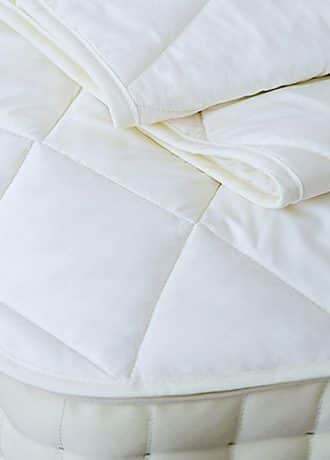
Care should also account for the rest of the bed. A mattress protector can help limit exposure to perspiration, spills, and everyday soil, reducing the need to wash the sheets at unusually high temperatures or treat stains aggressively. As one example of a washable protective layer, the Vispring Lux Skirted Mattress Protector is described with a cotton outer, British wool fill, and a fitted elasticated skirt. Its care instructions call for a gentle cold wash and low-heat or line drying. It is a mattress protector rather than a sheet, but the principle is relevant: check the care details of each layer in the bed rather than treating all bedding as interchangeable.
Durability and the long view
Durability does not follow automatically from a fiber label. It depends on the quality of the fiber and yarn, fabric construction, seam finishing, fit, frequency of laundering, and care. A well-made cotton sheet can last for years, as can linen, but any sheet can thin, pill, fade, or weaken if it is poorly constructed or repeatedly subjected to harsh washing and high heat.
Linen is often chosen for its ability to soften with use while keeping a substantial, textured character. Cotton’s lifespan varies across its many constructions: a durable percale may wear differently from a very fine or heavily finished fabric. Inspect practical details such as reinforced seams, elastic quality on fitted sheets, clear fiber labeling, and the manufacturer’s care guidance.
It is also worth considering how a sheet fits the mattress. A fitted sheet that is too shallow may pull loose; one with an appropriate pocket depth is more likely to remain secure. Mattress toppers and protectors add height, so measure the complete sleep surface rather than the bare mattress alone. A good fit reduces nightly adjustments and unnecessary strain on corners and seams.
When judging value, consider cost per year of use rather than price alone. A more expensive sheet is not automatically a better investment, and a lower-priced one is not necessarily a poor choice. The meaningful questions are whether the fabric suits your body and climate, whether it withstands the care you can realistically provide, and whether you enjoy using it enough to keep it in regular rotation.
Which sheets suit different sleepers?
There is no single best sheet for every bedroom. The following comparisons can help organize the decision, but they are starting points rather than rules.
- If you prefer a crisp, smooth bed: cotton percale is a natural candidate. Its feel is usually cleaner and more matte than sateen or linen.
- If you like a softer, more fluid surface: cotton sateen may be appealing, especially if you enjoy a smooth hand and gentle drape.
- If you want visible texture and an informal finish: linen may suit you, particularly if you do not mind a naturally rumpled appearance.
- If you sleep warm: compare the specific weave and fabric weight as well as the fiber. Lightweight percale and breathable linen are both worth considering; personal response and room conditions still matter.
- If you want the simplest routine: choose a product whose care instructions fit your normal laundry habits. Many cotton sheets are easy to maintain, while some linen is also machine-washable, but labels differ.
- If you have sensitive skin: focus on the finished surface and any treatments, not simply the material name. A sample, return policy, or clear description of finishing may help you make a more confident choice.
For couples with different preferences, a practical compromise may be a cotton weave that balances smoothness and airflow, or separate sheet sets rotated by season. The goal is not to settle a debate about which fiber is superior. It is to make the shared sleep environment comfortable for the people using it.
A simple buying checklist
Before choosing cotton or linen sheets, consider these questions:
- What surface do I enjoy? Decide whether you prefer crisp, smooth, or textured fabric.
- How does my room feel at night? Think about local climate, seasonal changes, humidity, and ventilation.
- What is the fabric construction? For cotton, check for percale, sateen, or another stated weave. For linen, look for clear fiber and fabric information.
- Will the care fit my routine? Read washing and drying instructions before buying, not after the first laundry day.
- Will it fit my bed? Account for the mattress, topper, and protector when checking dimensions and pocket depth.
- What does the price include? Confirm which pieces come in the set, whether pillowcases are included, and what return or warranty terms apply.
- Can I judge the fabric before committing? A swatch, detailed product description, or reasonable return policy can reduce uncertainty.
Common assumptions worth questioning
“Linen is always cooler than cotton.” Linen can feel airy and manage moisture well, but cotton construction varies widely. A light percale and a dense sateen behave differently. Room conditions and the sleeper matter, too.
“More thread count means better sheets.” Thread count is one specification, not a complete measure of quality or comfort. It is especially poor as a direct comparison between cotton and linen.
“Linen should feel soft from the start.” Some linen is pre-washed or specially finished, while other linen begins firmer and softens through use. A textured or slightly uneven hand is normal for many linen fabrics.
“Natural fiber means maintenance-free.” Cotton and linen are plant-based fibers, but both still need appropriate laundering. Natural origin does not remove the need to read care instructions or protect bedding from avoidable wear.
“Luxury means one particular material.” Luxury is often a question of thoughtful construction, comfort, fit, and longevity—not a single fiber or a high price. A modestly priced sheet that suits your sleep habits may be a better choice than a costly one that does not.
The decision is tactile—and personal
Cotton and linen are both credible choices for breathable bedding, but they answer different preferences. Cotton offers a wide range of familiar finishes, from crisp percale to smooth sateen. Linen brings a more visibly textured surface and a relaxed drape that many people appreciate as it softens over time.
When comparing sheets, focus on the actual fabric rather than a single marketing term. Consider weave, weight, finish, care, and fit. Ask how the material feels against your skin and how it performs in the room where you sleep. If you can, handle a swatch or start with a set that has a clear return policy.
Ultimately, the better sheet is the one that helps your bed feel inviting night after night—and remains practical to care for long after its first wash. Cotton or linen can each earn that place. Your preferred texture, temperature comfort, and routines will decide which does it best.